
MTM - Caregiver Portal
Designing a new caregiver experience that enables parents and guardians to manage medical transportation for their dependents.
Project overview
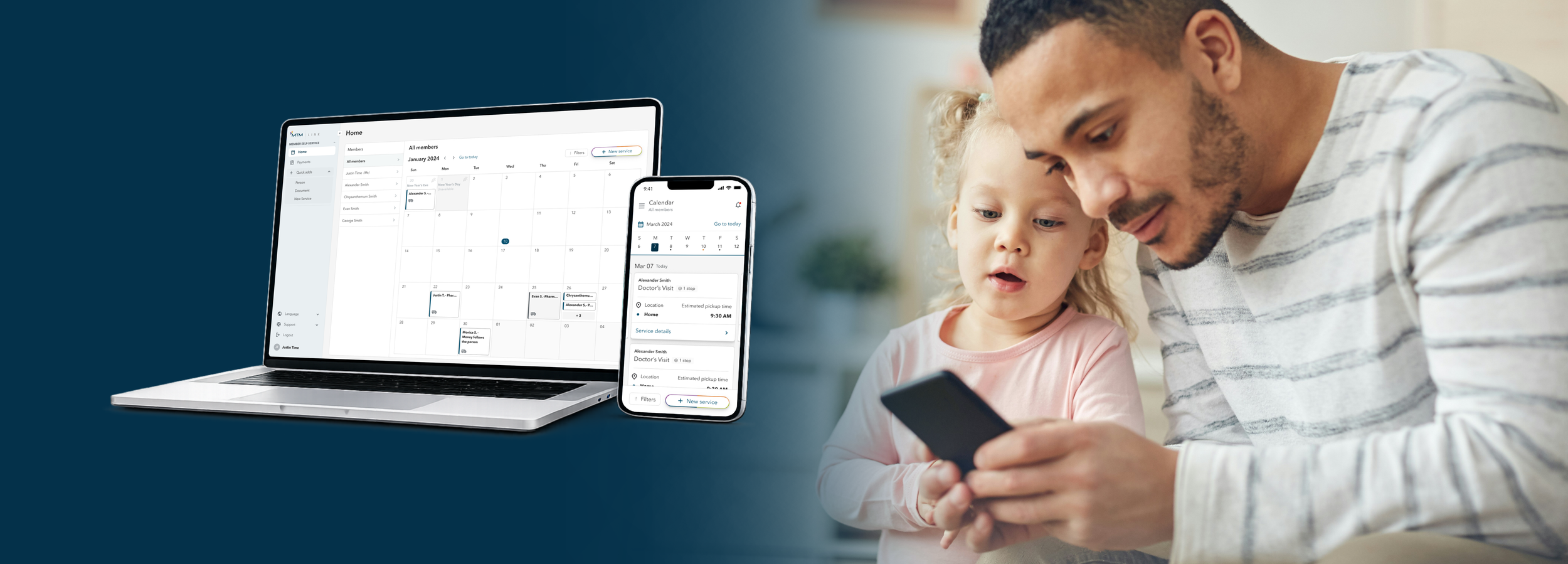
MTM, Inc. provides non-emergency medical transportation (NEMT) services, helping members schedule rides to healthcare appointments. As the lead designer for this initiative, I designed MTM's first Caregiver Portal, a new web and mobile experience that allows caregivers to manage transportation on behalf of eligible dependents. MTM’s Member Self-Service platform allowed members to schedule and manage medical transportation, but only for themselves. Feedback from members, call center representatives, and health plan partners revealed an opportunity to expand the platform to parents and legal guardians who needed to manage transportation for multiple dependents.
I led the end-to-end design of the caregiver experience, including the caregiver registration flow, the caregiver portal, and the internal tools used by MTM's call center representatives to manage caregiver relationships. The solution enables members to register as caregivers and manage transportation requests for up to five eligible minor dependents covered under the same health plan.
Stakeholders
Product Managers: Defined requirements, scope, and business priorities
Engineering: Evaluated technical feasibility and implementation
Health Plan Partners: Helped define eligibility rules and caregiver requirements
Call Center Representatives: Provided insight into existing caregiver needs and support workflows
Caregivers and Dependents: Participated in usability testing and provided feedback that informed design decisions
UX/UI Design: I led the end-to-end design, prototyping, and usability testing
My Role
As the lead designer, I owned the end-to-end UX/UI design of the Caregiver Portal.
Led UX/UI design from discovery through final designs
Collaborated with product, engineering, and stakeholders throughout the project
Conducted usability testing and iterated based on feedback
Created user flows, wireframes, prototypes, and high-fidelity designs
Designed the caregiver registration experience
Designed the web and mobile Caregiver Portal
Designed supporting tools for call center representatives
Defining the Experience
Because the Caregiver Portal was a brand-new product, there were no existing workflows to build upon. I worked closely with product managers, stakeholders, engineers, and health plan partners to define the product from the ground up by establishing the business rules, permissions, and user experience that would support both caregivers and internal users.
Determining Eligibility
Limited initial eligibility to parents and legal guardians enrolled in the same health plan as their minor dependents.
Prioritized the largest caregiver user group while reducing implementation complexity and keeping the initial release manageable.
Establishing Permissions
Verified caregivers are granted the same transportation management capabilities as members managing their own care, enabling caregivers to:
Schedule and cancel rides
Edit ride itineraries
Create recurring transportation schedules
View upcoming and completed trips
Managing Multiple Dependents
Addressed a critical business concern by making it easy for caregivers to identify and switch between themselves and their dependents, minimizing the risk of booking rides for the wrong person.
Protecting Privacy and Security
Validated caregiver information against records provided by MTM's health plan partners before granting access to dependent information.
Provided verified caregivers with secure access to:
Transportation details and history
Health plan coverage information
HIPAA-protected member information
Creating a Connected Experience
Designed responsive web and mobile experiences that integrated with MTM's existing ecosystem.
Created internal tools for call center representatives to establish and manage caregiver relationships.
Ensured a consistent experience across member self-service, the Caregiver Portal, and call center support.
Phase 1: the Registration flow
The Problem
Caregiver access introduced a completely new user type to the platform. Before caregivers could manage transportation for dependents, the system needed a secure way to establish and verify caregiver relationships without making registration feel overwhelming.
My Approach
To create a familiar experience, I modeled the registration process after MTM's existing Member Self-Service registration flow while introducing the additional information required to verify caregiver eligibility.
The experience guides users through:
Creating a caregiver account
Providing identifying information to find eligible dependents
Confirming successful registration
I validated the registration flow through multiple rounds of usability testing with 10 participants, beginning with low-fidelity wireframes to evaluate task flows and information architecture before refining the experience with high-fidelity prototypes. Feedback from these sessions informed design iterations that improved clarity, reduced friction, and increased confidence throughout the registration process.
Caregiver Registration Screen
Find Dependent Screen
Success Screen
Phase 2. Managing dependents
The Problem
Once caregivers were verified, they needed an easy way to manage multiple dependents without losing track of whose transportation they were viewing or editing.
My Approach
I designed the caregiver dashboard around a calendar view that allows caregivers to quickly:
Switch between dependents
View transportation history
Schedule rides
Manage recurring transportation
Edit existing services
The experience reused navigation patterns from the existing Member Self-Service portal to minimize the learning curve while clearly indicating which dependent was currently being managed.
Mobile filter
Mobile Calendar view
Web Caregiver People Tab
Phase 3. Supporting Internal Users
The Problem
Launching the caregiver experience required more than a customer-facing portal. MTM’s call center representatives also needed the ability to locate caregivers, verify relationships, and manage caregiver accounts while assisting members over the phone. Without internal tools designed around these new workflows, supporting caregivers would become slower and more error-prone.
My Approach
I designed internal workflows that gave call center representatives the information and actions they needed to confidently support caregivers. The experience focused on making caregiver relationships easy to understand while reducing the number of steps required to complete common support tasks.
The designs included capabilities for:
Looking up caregiver accounts
Viewing linked dependents and caregiver relationships
Managing permissions and account access
Updating caregiver and dependent information when appropriate
Providing audit history where needed to improve accountability and troubleshooting
The goal was to ensure the internal experience complemented the caregiver portal so that both caregivers and customer care representatives could complete tasks efficiently.
Calendar view
Services Tab
Outcome & reflection
The Caregiver Portal introduced a new capability to MTM’s digital ecosystem, allowing verified caregivers to independently manage medical transportation for eligible dependents. The experience extended across web, mobile, and internal call center tools to create a connected experience for both caregivers and the representatives supporting them.
The project delivered:
A new self-service experience for caregivers
Web and mobile tools for managing multiple dependents
Internal tools for managing caregiver relationships
A scalable foundation for expanding caregiver access in the future
Given the project's timeline and available research resources, usability testing focused on the caregiver registration flow, which we identified as a critical entry point into the experience. I conducted multiple rounds of testing using both low-fidelity wireframes and high-fidelity prototypes, with a different group of participants for each round. These sessions uncovered usability issues early, validated key decisions, and informed iterations before development. The caregiver portal and call center representative experiences were not formally tested during this phase, creating an opportunity for future research to validate and refine those workflows.
My biggest takeaway was the value of defining product principles early. Establishing clear rules around eligibility, permissions, privacy, and consistency helped guide design decisions and create an experience that could scale as the product evolved.